Hot stone massage looks like a novelty from the waiting room: smooth dark stones in a warmer, a therapist placing them in a row along a client's back. It is actually one of the more practical tools in massage, because heat changes what muscle allows. A cold, guarded muscle resists pressure and tires the therapist's hands. A warm one softens, accepts deeper work with less force, and lets go faster. The stones are not decoration on top of a massage. They are how the massage gets its head start.
Here is what the stones are, how a session runs, who it suits, and who should skip it.
What the stones are and how they are used
The stones are heated in water, tested before contact, and never applied at a temperature the therapist has not checked against their own skin first. Some stones rest in place: along the spine, in the palms, between the toes, warming an area while the therapist works elsewhere. Others become extensions of the hands, gliding with oil so the heat and the pressure arrive together. A stone that sits in one spot cools over several minutes and gets swapped for a fresh one. If a stone ever feels too hot, one word fixes it; heat tolerance varies a lot between people and across the body.
Who hot stone suits best
The strongest case is the client who is always cold and always tight: the person whose shoulders live near their ears from October to April, whose muscles feel like they need ten minutes of any session just to admit the therapist into the room. Heat shortens that warm-up dramatically. It also suits people who want deep results without deep pressure, since warmed tissue yields to moderate work that would bounce off it cold. Clients with fibromyalgia-style widespread tenderness often tolerate stone work better than firm hand work, though that is a conversation to have when booking. And in a North Carolina winter, when cold rain has been falling for three days, the simple comfort of it is a legitimate reason all by itself.
Who should skip it, or ask first
Heat is a stress on the circulatory system, mild but real, so some conditions call for caution or a different session: pregnancy (prenatal work uses its own adaptations), uncontrolled blood pressure or heart conditions, diabetes with reduced sensation in the feet, varicose veins in areas to be worked, recent surgery, and any skin that is sunburned, broken, or inflamed. Reduced sensation is the sneakiest risk: if you cannot feel heat accurately somewhere, a stone cannot be judged there. None of this is about fear. It is why the intake form asks what it asks, and why answering it fully matters more for this session than most.
How it differs from a regular session, practically
Expect the pace to feel unhurried at the start, while stones are placed, and the room to feel warmer than usual. Most people drift further toward sleep in a stone session than in ordinary work, partly the heat and partly the rhythm. Afterward, the advice is the standard set with one addition: water matters more than usual, since you have effectively had a long, warm soak from the inside of the muscles out, and a quiet evening lets the looseness settle. Soreness is less common than after deep tissue work, which is rather the point of choosing heat to do the persuading.
Stone massage in summer
People assume hot stones are a winter-only session, and mostly they are right to book them that way. But the heat is local and controlled, not a sauna: in an air-conditioned room, stone work on a chronically tight back is comfortable even in July, and some clients prefer it precisely because the warmth is confined to the muscles being treated. If you run hot generally, say so when booking and the therapist can lean on the hand-work side of the session and use stones sparingly.
Common questions
Can the stones burn you?
They should not, ever. Stones are water-heated to a controlled range and tested by the therapist before placement, and a resting stone is laid on a barrier or kept moving if you are heat-sensitive. Speak up at the first hint of too hot.
Is hot stone a deep tissue massage?
Not by itself, though the two combine well. Heat lets moderate pressure achieve some of what deep pressure does, which is why stone sessions often include focused work on one or two tight areas.
What are the stones made of, and are they cleaned?
Usually smooth basalt, chosen because it holds heat and has no sharp edges. Stones are washed and sanitized between clients as standard practice in a professional studio.
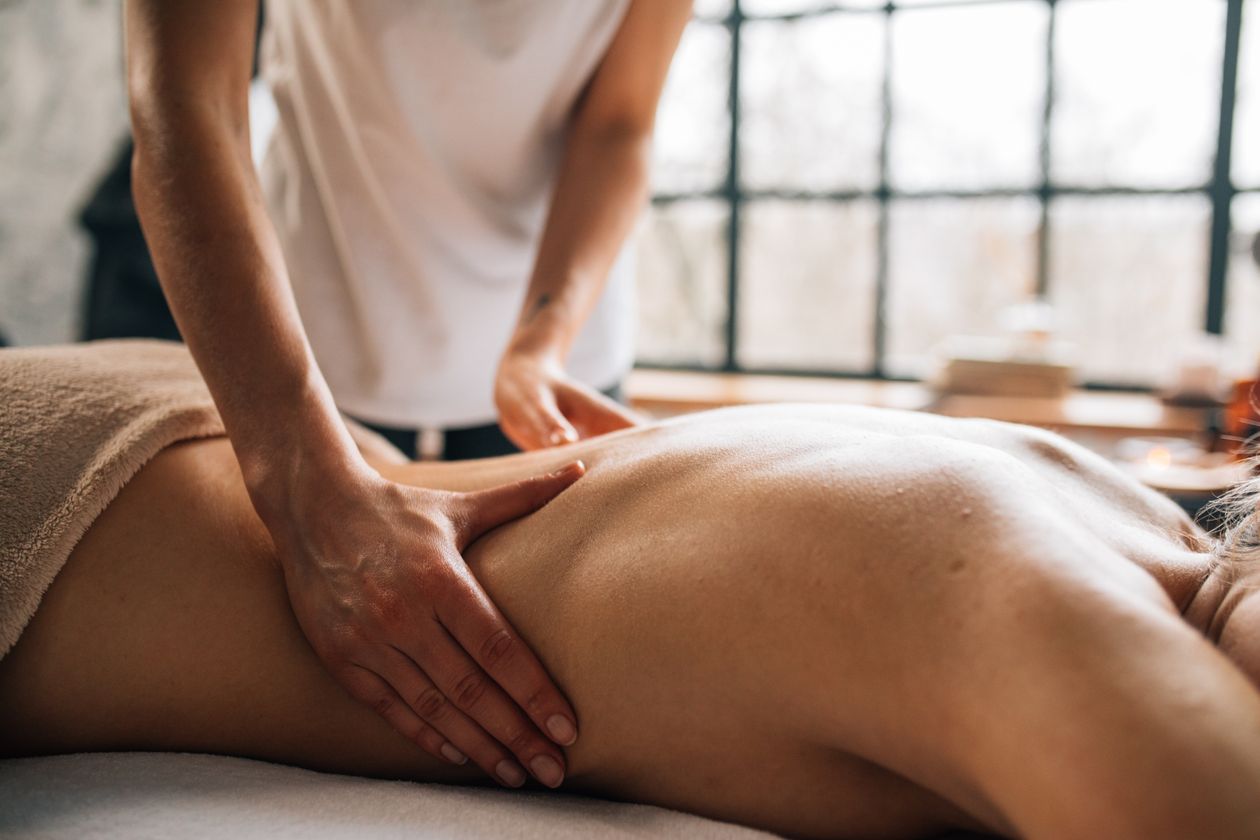
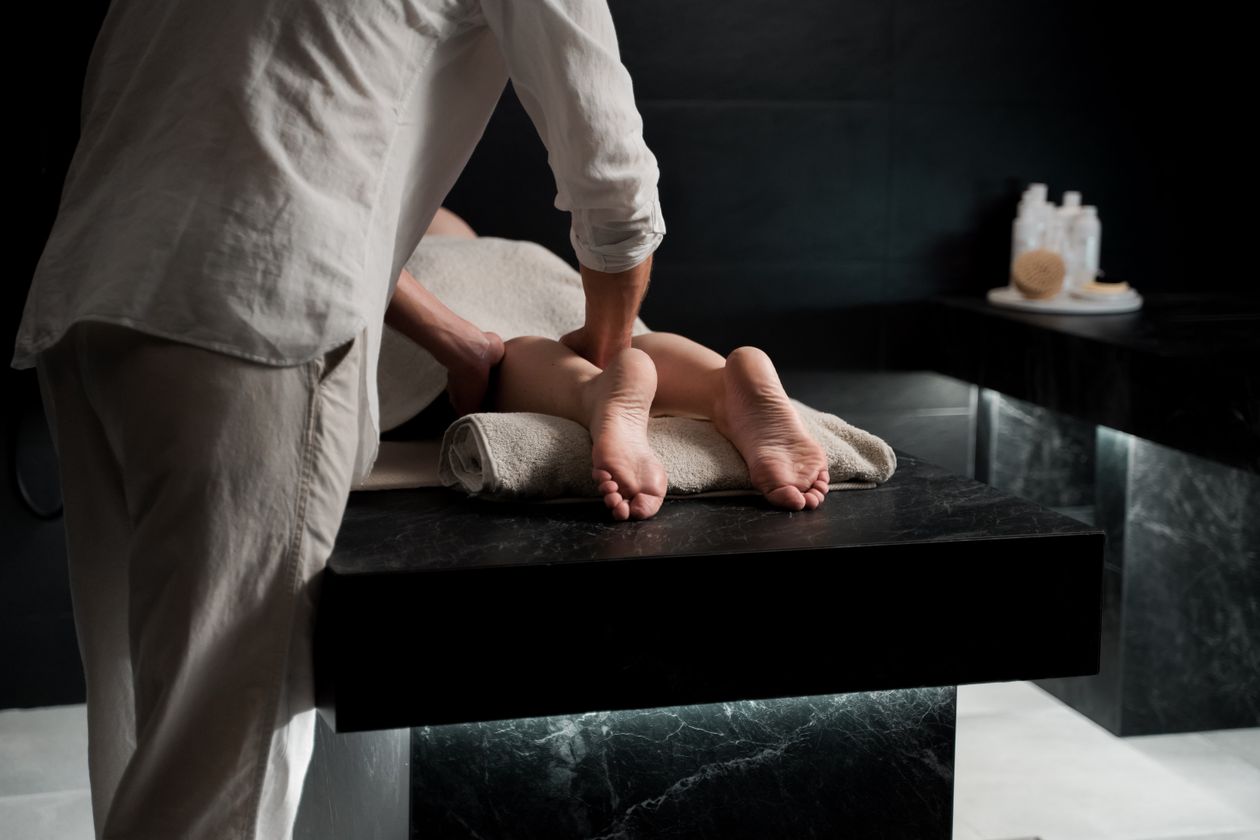
Photos in this guide are representative stock images.
← All guides from Day Break Massage & Wellness← Back to Day Break Massage & Wellness